

Sample document: Rice
Author :technical-committee: Food products :fullname: Author Name :mn-document-class: standoc :doctype: document :language: en :created-date: 2021-07-31 :copyright-holder: Ribose Inc. :copyright-year: 2021
.Foreword ISO (the International Organization for Standardization) is a worldwide federation of national standards bodies (ISO member bodies). The work of preparing International Standards is normally carried out through ISO technical committees. Each member body interested in a subject for which a technical committee has been established has the right to be represented on that committee. International organizations, governmental and non-governmental, in liaison with ISO, also take part in the work. ISO collaborates closely with the International Electrotechnical Commission (IEC) on all matters of electrotechnical standardization.
The procedures used to develop this document and those intended for its further maintenance are described in the ISO/IEC Directives, Part 1. In particular the different approval criteria needed for the different types of ISO documents should be noted. This document was drafted in accordance with the editorial rules of the ISO/IEC Directives, Part 2 (see www.iso.org/directives).
Attention is drawn to the possibility that some of the elements of this document may be the subject of patent rights. ISO shall not be held responsible for identifying any or all such patent rights. Details of any patent rights identified during the development of the document will be in the Introduction and/or on the ISO list of patent declarations received (see www.iso.org/patents).
Any trade name used in this document is information given for the convenience of users and does not constitute an endorsement.
For an explanation on the voluntary nature of standards, the meaning of ISO specific terms and expressions related to conformity assessment, as well as information about ISO's adherence to the World Trade Organization (WTO) principles in the Technical Barriers to Trade (TBT) see the following URL: www.iso.org/iso/foreword.html.
This document was prepared by Technical Committee {technical-committee}.
This second edition cancels and replaces the first edition, which has been technically revised.
The main changes compared to the previous edition are:
- updated normative references;
- deletion of 4.3.
A list of all parts in the ISO {docnumber} series can be found on the ISO website.
A Foreword shall appear in each document. The generic text is shown here. It does not contain requirements, recommendations or permissions. For further information on the Foreword, see ISO/IEC Directives, Part 2, 2016, Clause 12.Introduction
This document was developed in response to worldwide demand for minimum specifications for rice traded internationally, since most commercial bulks of grain, which have not been screened or aspirated, contain a proportion of other grains, weed seeds, chaff, straw, stones, sand, etc. The vegetable materials can have physical and biological properties which differ from those of the main constituent and can therefore affect the storage behaviour.
Rice is a permanent host to a considerable microflora; most of these microorganisms are cosmopolitan, the majority are innocuous, but some produce harmful by-products. Microflora communities present on freshly harvested rice include many types of bacteria, moulds and yeasts. While the rice is ripening and its moisture content is falling, the number of field microorganisms, mainly bacteria, diminishes. When the rice is harvested, it is invaded by storage microorganisms and the field microflora gradually dies out. If the mass fraction of moisture (formerly expressed as moisture content) is less than 18 %, the microflora does not multiply, whereas above 18 % it does so rapidly. Thus, at harvest, the qualitative and the quantitative composition of the microflora depends more upon ecological factors than upon the variety of the rice. During transport and storage, additions to the microfloral population occur. Microorganisms on the rice at harvest tend to die out during storage and are replaced by microorganisms adapted to storage conditions.
Storage losses have been estimated as being an average of 5 %, and as much as 30 %, especially in countries with climates favourable to the rapid development of agents of deterioration and where storage techniques are poorly developed, such as developing countries in the damp tropics. The magnitude of these figures highlights the need to promote throughout the world a rapid improvement in techniques of conservation.
The International Organization for Standardization (ISO) draws attention to the fact that it is claimed that compliance with this document may involve the use of a patent concerning sample dividers given in AnnexA and shown in figureA-1.
ISO takes no position concerning the evidence, validity and scope of this patent right.
The holder of this patent right has assured ISO that he/she is willing to negotiate licences under reasonable and non-discriminatory terms and conditions with applicants throughout the world. In this respect, the statement of the holder of this patent right is registered with ISO. Information may be obtained from:
Vache EquipmentFictitiousWorldmailto:gehf@vacheequipment.fic[]
Attention is drawn to the possibility that some of the elements of this document may be the subject of patent rights other than those identified above. ISO shall not be held responsible for identifying any or all such patent rights.
Scope
This document specifies minimum requirements and test methods for rice (Oryza sativa L.).
It is applicable to husked rice, husked parboiled rice, milled rice and milled parboiled rice, suitable for human consumption, directly or after reconditioning.
It is not applicable to cooked rice products.
Normative references
Terms and definitions
paddy
paddy rice rough rice
rice retaining its husk after threshing
husked rice
cargo rice
paddy from which the husk only has been removed
clause 3.2, The term "cargo rice" is shown as deprecated, and Note 1 to entry is not included here
milled rice
white rice
husked rice from which almost all of the bran and embryo have been removed by milling
parboiled rice
rice whose starch has been fully gelatinized by soaking paddy rice or husked rice in water followed by a heat treatment and a drying process
waxy rice
variety of rice whose kernels have a white and opaque appearance
extraneous matter
EM rice
organic and inorganic components other than whole or broken kernels
Foreign seeds, husks, bran, sand, dust.
HDK
heat-damaged kernel
kernel, whole or broken, which has changed its normal colour as a result of heating
damaged kernel
kernel, whole or broken, showing obvious deterioration due to moisture, pests, disease or other causes, but excluding HDK
immature kernel
unripe kernel
kernel, whole or broken, which is unripe and/or underdeveloped
husked rice yield
amount of husked rice obtained from paddy
nitrogen content
quantity of nitrogen determined after application of the procedure described
crude protein content
quantity of crude protein obtained from the nitrogen content as determined by applying the specified method, calculated by multiplying this content by an appropriate factor depending on the type of cereal or pulse
gelatinization
hydration process conferring the jelly-like state typical of the coagulated colloids, which are named "gels", on kernels
gel state
condition reached as a consequence of gelatinization, when the kernel is fully transparent and absolutely free from whitish and opaque granules after being pressed between two glass sheets
gelatinization time
t_90
time necessary for 90 % of the kernels to pass from their natural state to the gel state
Specifications
General, organoleptic and health characteristics
Kernels of rice, whether parboiled, husked or milled, and whether whole or broken, shall be sound, clean and free from foreign odours or odour which indicates deterioration.
The levels of additives and pesticide residues and other contaminants shall not exceed the maximum limits permitted in the country of destination.
The presence of living insects which are visible to the naked eye is not permitted. This should be determined before separating the bulk sample into test samples.
Physical and chemical characteristics
{blank}
The mass fraction of moisture, determined in accordance with ISO712, using an oven complying with the requirements of IEC61010-2, shall not be greater than 15 %.1
The mass fraction of extraneous matter and defective kernels in husked and milled rice, whether or not parboiled, determined in accordance with AnnexA, shall not be greater than the values specified in table1.
{blank}
The defect tolerance for the categories considered, and determined in accordance with the method given in AnnexA, shall not exceed the limits given in table1.
.Maximum permissible mass fraction of defects
| Defect 4+^ | Maximum permissible mass fraction of defects in husked ricew_max% |
| in husked rice | in milled rice (non-glutinous) |
| in husked parboiled rice | in milled parboiled rice |
| Extraneous matter: organic 2 | 1,0 |
| 0,5 | 1,0 |
| 0,5 | Extraneous matter: inorganic 3 |
| 0,5 | 0,5 |
| 0,5 | 0,5 |
| Paddy | 2,5 |
| 0,3 | 2,5 |
| 0,3 | Husked rice, non-parboiled |
| Not applicable | 1,0 |
| 1,0 | 1,0 |
| Milled rice, non-parboiled | 1,0 |
| Not applicable | 1,0 |
| 1,0 | Husked rice, parboiled |
| 1,0 | 1,0 |
| Not applicable | 1,0 |
| Milled rice, parboiled | 1,0 |
| 1,0 | 1,0 |
| Not applicable | Chips |
| 0,1 | 0,1 |
| 0,1 | 0,1 |
| HDK | 2,0 footnote:defectsmass[The maximum permissible mass fraction of defects shall be determined with respect to the mass fraction obtained after milling.] |
| 2,0 | 2,0 4 |
| 2,0 | Damaged kernels |
| 4,0 | 3,0 |
| 4,0 | 3,0 |
| Immature and/or malformed kernels | 8,0 |
| 2,0 | 8,0 |
| 2,0 | Chalky kernels |
| 5,0 5 | 5,0 |
| Not applicable | Not applicable |
| Red kernels and red-streaked kernels | 12,0 |
| 12,0 | 12,0 6 |
| 12,0 | Partly gelatinized kernels |
| Not applicable | Not applicable |
| 11,0 7 | 11,0 |
| Pecks | Not applicable |
| Not applicable | 4,0 |
| 2,0 | Waxy rice |
| 1,0 8 | 1,0 |
| 1,0 9 | 1,0 |
| Live insects shall not be present. Dead insects shall be included in extraneous matter. |
Sampling
Sampling shall be carried out in accordance with ISO 24333:2009, Clause 5.
Test methods
Moisture content
Determine the mass fraction of moisture in accordance with the method specified in ISO712.
Waxy rice content
Determine the mass fraction of waxy rice. AnnexB gives an example of a suitable method.
Nitrogen content and crude protein content
Determine the nitrogen content and crude protein content in accordance with either clause 9, or ISO20483. For details on the determination of protein content using the Kjeldahl method, see Reference ref12 in the Bibliography. For details concerning the use of the Dumas method, see References ref10 and ref16.
Calculate the crude protein content of the dry product by multiplying the value of the nitrogen content by the conversion factor specified in annex C and Table C.1, that is adapted to the type of cereals or pulses fnfn and to their use.
Gelatinization time
Determine the gelatinization time, t_90, for rice kernels during cooking. An example of a typical curve is given in figureC-1. Three typical stages of gelatinization are shown in figureC-2.
Report the results as specified in clause7.
Husked rice yield
Determination
Determine the husked rice yield in accordance with ISO6646.
Precision
Interlaboratory test
The results of an interlaboratory test are given in AnnexD for information
Repeatability
The absolute difference between two independent single test results, obtained using the same method on identical test material in the same laboratory by the same operator using the same equipment within a short interval of time, shall not exceed the arithmetic mean of the values for r obtained from the interlaboratory study for husked rice in more than 5 % of cases:
r = 1 %where
- r
- is the repeatability limit.
Reproducibility
The absolute difference between two single test results, obtained using the same method on identical test material in different laboratories by different operators using different equipment, shall not exceed the arithmetic mean of the values for R obtained from the interlaboratory study in more than 5 % of cases:
R = 3 %where
- R
- is the reproducibility limit.
Test report
For each test method, the test report shall specify the following:
- all information necessary for the complete identification of the sample;
- a reference to this document (i.e. ISO {docnumber}-{partnumber});
- the sampling method used;
- the test method used;
- the test result(s) obtained or, if the repeatability has been checked, the final quoted result obtained;
- all operating details not specified in this document, or regarded as optional, together with details of any incidents which may have influenced the test result(s);
- any unusual features (anomalies) observed during the test;
- the date of the test.
Packaging
The packaging shall not transmit any odour or flavour to the product and shall not contain substances which may damage the product or constitute a health risk.
If bags are used, they shall comply with the requirements of clause 9, or ISO8351-2, as appropriate.
Marking
The packages shall be marked or labelled as required by the country of destination.
Determination of defects
Principle
Extraneous matter, broken kernels, damaged kernels and other kinds of rice are separated manually according to the following types: husked rice, milled rice, husked parboiled rice and milled parboiled rice. Each type is then weighed.
Apparatus
The usual laboratory apparatus and, in particular, the following.
%inline-header]
Sample divider,
consisting of a conical sample divider or multiple-slot sample divider with a distribution system, e.g. "Split-it-right" sample divider, such as that shown in figureA-1.
Sieve,
with round perforations of diameter 1,4 mm.
Tweezers.
Scalpel.
Paintbrush.
%inline-header]
Steel bowls,
of diameter 100 mm ± 5 mm; seven per test sample.
Balance,
which can be read to the nearest 0,01 g.
Sampling
See clause5.
Procedure
Preparation of test sample
Carefully mix the laboratory sample to make it as uniform as possible, then proceed to reduce it, using a divider (AnnexA-2-1), until a quantity of about 30 g is obtained.
All parts of kernels which get stuck in the perforations of a sieve should be considered to be retained by the sieve.
.Split-it-right sample divider image::images/a1.png[Alt1]
Determination
Weigh, to the nearest 0,1 g, one of the test samples obtained in accordance with AnnexA-4-1 and separate the different defects into the bowls (AnnexA-2-6). When a kernel has several defects, classify it in the defect category for which the maximum permissible value is the lowest (see table1).
Weigh, to the nearest 0,01 g, the fractions so obtained.
Calculation
Express the mass fraction of each defect using formulaA-1:
where
- w
- is the mass fraction of grains with a particular defect in the test sample;
- m_D
- is the mass, in grams, of grains with that defect;
- m_S
- is the mass, in grams, of the test sample.
Test report
Report the results as specified in clause7.
Determination of the waxy rice content of parboiled rice
Principle
Waxy rice kernels have a reddish brown colour when stained in an iodine solution, while non-waxy rice kernels show a dark blue colour.
Apparatus
The usual laboratory apparatus and, in particular, the following.
%inline-header]
Balance,
capable of weighing to the nearest 0,01 g.
%inline-header]
Glass beaker,
of capacity 250 ml.
%inline-header]
Small white colour bowls,
or any white colour container of a suitable size.
%inline-header]
Wire sieve,
with long rounded apertures of (1 mm {:(+0.02),(0):} mm) × (20 mm {:(+2),(-1):} mm).
%inline-header]
Stirrer rod.
%inline-header]
Tweezers or forceps.
%inline-header]
Tissue paper.
Reagents
%inline-header]
Deionized water,
Grade 3 quality as specified in ISO3696.
%inline-header]
Iodine stock solution,
containing a mass fraction of 4,1 % iodine and 6,3 % potassium iodide in deionized water such as Lugols.10
%inline-header]
Iodine working solution,
obtained by diluting the stock solution (AnnexB-3-2) two times (by volume) with deionized water (AnnexB-3-1).
Prepare fresh daily.
Sampling
Sampling shall be carried out in accordance with clause5.
Determination
{blank}
Weigh a portion of about 100 g of milled rice and put it into a glass beaker (AnnexB-2-2).
{blank}
Add enough iodine working solution (AnnexB-3-3) to soak the kernels, and stir (AnnexB-2-5) until all the kernels are submerged under the solution. Let the kernels soak in the solution for 30 s.
{blank}
Pour the rice and solution into a wire sieve (AnnexB-2-4), and shake the basket slightly in order to drain out the solution. Then place the wire sieve on a piece of tissue paper (AnnexB-2-7) to absorb the excess liquid.
{blank}
Pour the stained kernels into a bowl (AnnexB-2-3). Using tweezers or forceps (AnnexB-2-6), separate the reddish brown kernels of waxy rice from the dark blue kernels of non-waxy rice.
{blank}
Weigh the waxy rice portion (m_1) and the non-waxy rice portion (m_2) to the nearest 0,1 g.
Calculation
Calculate the mass fraction, expressed as a percentage, of the waxy rice, w_(wax), using formulaB-1:
where
- m_1
- is the mass, expressed in grams, of the waxy rice portion;
- m_2
- is the mass, expressed in grams, of the non-waxy rice portion.
Test report
Report the results as specified in clause7, giving the results calculated using formulaB-1.
Gelatinization
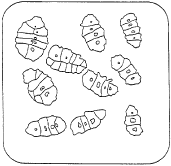
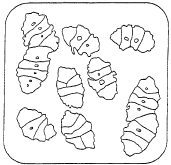
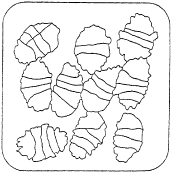
figureC-1 gives an example of a typical gelatinization curve. figureC-2 shows the three stages of gelatinization.
.Typical gelatinization curve image::images/b1.png[Alt2] 11
*Key*
- w
- mass fraction of gelatinized kernels, expressed in per cent
- t
- cooking time, expressed in minutes
- t_90
- time required to gelatinize 90 % of the kernels
- P
- point of the curve corresponding to a cooking time of t_90
.Stages of gelatinization
Results of interlaboratory test for husked rice yields
An interlaboratory test fn was carried out by the ENR [Rice Research Centre (Italy)] in accordance with ISO5725-1 and ISO5725-2, with the participation of 15 laboratories. Each laboratory carried out three determinations on four different types of kernel. The statistical results are shown in tableD-1.
.Repeatability and reproducibility of husked rice yield
| Description 4+ | Rice sample |
| Arborio | Drago 12 |
| Balilla | Thaibonnet |
| Number of laboratories retained after eliminating outliers | 13 |
| 11 | 13 |
| 13 | Mean value, g/100 g |
| 81,2 | 82,0 |
| 81,8 | 77,7 |
| Standard deviation of repeatability, s_r, g/100 g | 0,41 |
| 0,15 | 0,31 |
| 0,53 | Coefficient of variation of repeatability, % |
| 0,5 | 0,2 |
| 0,4 | 0,7 |
| Repeatability limit, r (= 2,83 s_r) | 1,16 |
| 0,42 | 0,88 |
| 1,50 | Standard deviation of reproducibility, s_R, g/100 g |
| 1,02 | 0,20 |
| 0,80 | 2,14 |
| Coefficient of variation of reproducibility, % | 1,3 |
| 0,2 | 1,0 |
| 2,7 | Reproducibility limit, R (= 2,83 s_R) |
| 2,89 | 0,57 |
| 2,26 | 6,06 |
Extraneous information
_This appendix is not in the original Rice model document, and is inserted to illustrate elements absent from that document: block quotes, source code, and examples._
This International Standard gives the minimum specifications for rice (Oryza sativa L.) which is subject to international trade. It is applicable to the following types: husked rice and milled rice, parboiled or not, intended for direct human consumption. It is neither applicable to other products derived from rice, nor to waxy rice (glutinous rice).
Sample code
.Sample Code
puts "Hello, world."
%w{a b c}.each do |x| <1>
  puts x
end
<1> This is an annotation